Event 1
1993 Battle of Mogadishu
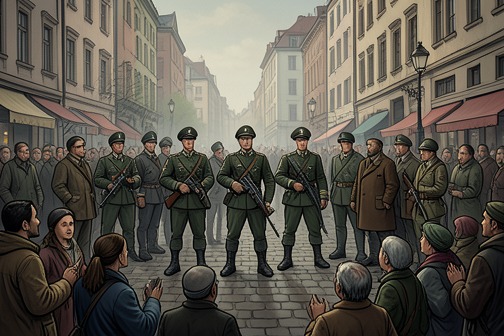
The [1993 Battle of Mogadishu](entity:event-recall-event-1993-7dc814cd66ff) began as a daylight raid to capture two senior lieutenants of [Mohamed Farrah Aidid](entity:character-recall-character-mohamed-farrah-aidi-e13ea17ccdff); the downing of a helicopter turned that limited operation into a fight to reach trapped crews and wounded soldiers. The collision between a tightly choreographed assault plan and a rapidly changing battle would shape the mission’s course, while placing civilians, armed fighters, and U.S. troops in the same streets.
## Background and the Raid Plan
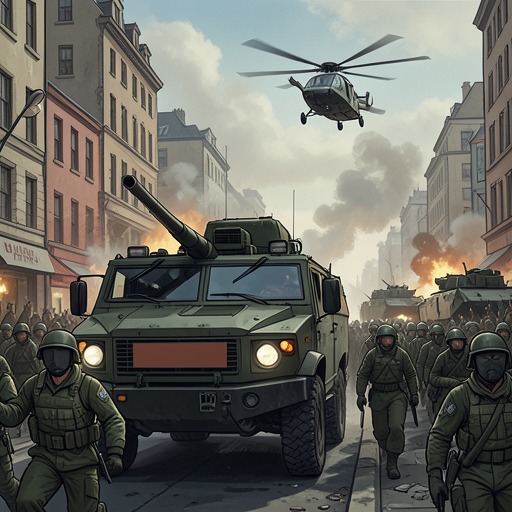
On the afternoon of [October 3, 1993](entity:time-recall-time-october-3-1993-7afa3999f929), U.S. Rangers were supporting a commando assault on a gathering of [Habr Gidir clan](entity:organization-recall-organization-57b5c66e9d27) leaders in [Mogadishu](entity:location-recall-location-mogadishu-2b8d2d4a4b85), [Somalia](entity:location-recall-location-e9f8e868ef14). The clan, led by Mohamed Farrah Aidid, had challenged the United States. The immediate objective was to capture two of Aidid’s top lieutenants inside a target house. Commandos were to storm the building; four helicopter loads of Rangers, including Chalk Four, would descend at the four corners of the block and seal it off so no one could enter or leave. The larger assault force comprised about 75 Rangers and 40 Commando troops in 17 helicopters. A 12-vehicle convoy stood by at the airport to drive three miles to the target, collect the prisoners and assault teams, and return to base. The plan depended on speed and coordinated movement: the raid force would secure the block while the vehicles carried those seized back across the city.
The plan changed when Cliff Wolcott’s helicopter, [Super 61](entity:object-recall-object-super-61-3388b6fafd19), was hit and fell into a narrow alley. Officers at the Joint Operations Center watched the crash in color on surveillance cameras: the aircraft shuddered, smoke appeared near its tail rotor, and it began turning before striking a stone building and smashing against a wall. The immediate danger to the six men aboard was only one part of the crisis. The convoy’s original assignment had been to carry 24 Somali prisoners back to the airport; after the crash, it was redirected to find and rescue Wolcott and his crew while still guarding the prisoners. The raid had become a rescue mission in streets the convoy struggled to navigate, under increasingly intense fire. To the officers watching, the crash also damaged the larger, ten-month U.S. mission in Somalia, which had been presented as part of a commitment to a New World Order and [United Nations](entity:organization-recall-organization-e95d8c5557b2) nation-building hopes.
## Rules of Engagement and Civilian Presence
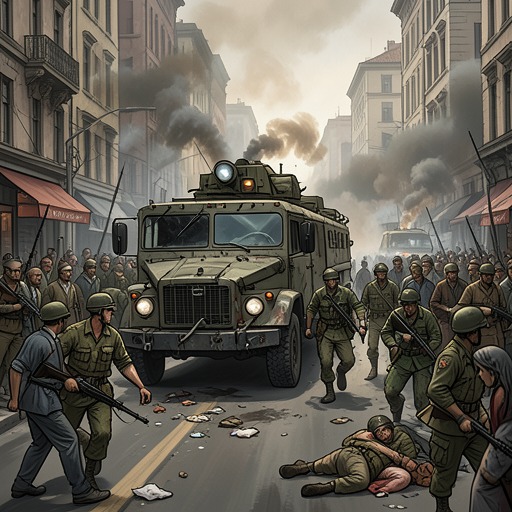
The battle exposed how difficult it was to distinguish combatants from civilians in Mogadishu’s crowded streets. Rangers had been given strict rules of engagement: they were to fire only at someone pointing a weapon at them. Yet armed people were mixed among women and children, while residents gathered to watch disturbances, and earlier Ranger missions had stirred widespread hatred. The rule was clear; the scene confronting the soldiers was not. As crowds approached and gunfire intensified, the intended distinction became harder to apply without putting civilians at risk.
That conflict took a specific form as a convoy crossed an alley. A woman in a flowing purple robe ran past a truck carrying a baby, while the driver fired at whatever moved. Specialist Eric Spalding shouted for him not to shoot because she had a child. The woman turned, still holding the baby on one arm, and raised a pistol with her free hand. Spalding shot her, then fired four more rounds before she fell. The convoy was moving too fast for him to see whether the infant had been hit; he feared that it probably had. The moment joined an apparent threat and a child in the same target area, leaving no certainty about the cost of the split-second decision.
As the fighting continued, the restraints on fire collapsed further. On the convoy’s return toward the airport, Dale Sizemore saw boys aged seven or eight, some armed and some not, and shot them; he also fired into crowds of women moving alongside men with rifles. Numb, angry, and intent on bringing his friends back safely, he no longer cared whether he himself was shot. His actions mark a stark change from the initial rule to fire only at someone pointing a weapon: amid mounting danger and the pull of unit loyalty, civilians and armed opponents became increasingly difficult to separate in practice, even when the difference remained consequential.
For residents, the same streets were not a military map but a place where neighbors and relatives might be caught in the fighting. Abdikarim encountered dead men, women, and children on the road; he also saw an American soldier wounded in the leg and trying to hide. When a woman ran in front of him, the soldier fired in their direction and she was hit, though she managed to get off the street. A [Little Bird helicopter](entity:object-recall-object-little-bird-8ab74f164405) then swept down an alley firing, sending bullets along the wall beside Abdikarim. After it passed, armed men ran toward the corner to shoot at the American. Abdikarim fled to a friend’s house, where he and others stayed on the floor through a night of continued shooting. The episode presents the battle not as a clean division between opposing forces, but as violence moving through civilian space, where the armed, the endangered, and the merely present could meet within seconds.
## Isolation, Command, and the Cost of Rescue
The crash transformed the rescue force’s problem from a change of destination into a breakdown of control on the ground. Rangers and commandos moving from the target building toward Super 61’s crash site split haphazardly into several groups, each pinned down nearby, with no single officer in charge of them all. The two forces answered to separate chains of command. Meanwhile, the convoy meant to reach the crash site became lost in the alleys and, battered by fire, was close to turning back. Helicopter gunships overhead could not safely fire on Somali gunmen with American troops scattered below, and after two Black Hawk helicopters had been shot down, no aircraft could land to evacuate the growing number of wounded. The men were near one another in the city but divided by streets, gunfire, and incompatible command structures.
The danger made even movement between defended positions a consequential command decision. When Mike Steele told Sergeant First Class Sean Watson to prepare to move out, Watson bluntly challenged the order. Five wounded men were with the group, two of them requiring carriers, and [Earl Fillmore](entity:character-recall-character-earl-fillmore-106b9df40bc1)’s body also had to be moved. Four men would be needed for each litter, leaving them exposed together as targets; Watson judged that the well-defended courtyard would take substantial force to overrun. His refusal was not simply insubordination: it set the prospective cost of leaving cover against the need to regroup and continue the rescue, at a moment when the wounded and dead could not be treated as cargo easily separated from the men still fighting.
Fear and unit obligation also pulled individual Rangers in opposite directions. Dale Sizemore, barred from the raid earlier because of a cast on his arm, was eager to join the fight; Steve Anderson, his friend, felt dread sharpened by earlier shrapnel wounds and the confusion on the radio. Brad Thomas, who had ridden back with Pilla’s blood on him, told Struecker he could not go back out. Struecker spoke to him quietly, acknowledged that he too was afraid, and urged him to act despite that fear because it was their job. Thomas walked away, then climbed aboard as the vehicles prepared to leave. The episode makes courage neither effortless nor uniform: a Ranger could want to refuse, and still return to the convoy under the pressure of comradeship, duty, and the expectations of the unit.
## Aftermath and Renewed Readiness
At the hangar, the commandos were already cleaning their weapons, checking their gear, and replenishing ammunition; they were prepared to return to the fight. Mike Steele, back at the hangar, finally received an accurate casualty list. As he arrived, Sergeant First Class Glenn Harris saluted him and said, “Rangers lead the way, sir.” The exchange places renewed readiness beside the accounting of losses: even as the battle’s casualties came into focus, the men were preparing to go back out.
## The Battle Seen from Above and Within
The battle’s command picture and its street-level reality diverged sharply. At the Joint Operations Center, officers watched surveillance images of crowds building barricades and lighting tires to summon help, while people armed with weapons streamed toward the fighting from across Mogadishu. On the ground, Eversmann’s men were firing in every direction except south toward the target building; people moved through alleys and approached the Rangers as gunfire intensified. The Rangers’ prescribed rule—fire only at someone pointing a weapon—met a crowd in which armed people stood among women and children. The screens could show the gathering danger, but the images did not give the soldiers on the street a dependable way to distinguish threats from civilians.
For Aden, sheltering in a house on [Freedom Road](entity:location-recall-location-freedom-c484ce3ca875), the arrival of a Little Bird helicopter brought the battle almost against the walls. Its blades passed inches from the neighboring buildings as dust swirled and gunfire grew louder. One airman aimed up the street while another ran toward the crashed Black Hawk; bullets struck the old car behind which Aden was hiding. At the Joint Operations Center, the same crisis appeared as Super 61’s tail-rotor smoke, slow turn, and violent impact in a narrow alley. Seen from the street or from the surveillance cameras, the crash marked the instant the raid’s controlled movements gave way to a battle spreading through inhabited streets.
## The Return Through the City
As the battered convoy neared the airport gate, the gunfire abruptly stopped. Only blocks earlier, the vehicles had been hammering the alleys in both directions; now open-air markets were full of people strolling and talking as if nothing had happened. The crowds parted for the crippled Humvees and the dead, wounded, and horror-stricken soldiers, then turned toward the column, grinning and applauding as it covered the last hundred yards. The sudden passage from a city under fire to ordinary market life, and the applause greeting the returning column, left the battle’s end suspended between relief and an unsettling spectacle.
## Preparation for a Daylight Assault
Thirteen minutes before the operation, three miles from the target, Eversmann rode from the Rangers’ beach base wedged between two helicopter crew chiefs, his long legs folded awkwardly around him. His Chalk Four—twelve men in tan desert camouflage—was arrayed on either side of the Black Hawk. The number weighed on him: he had worried about the responsibility of leading twelve men, prayed silently during Mass that morning, and now prayed again as the helicopter lifted. His brief inward ritual sat beside the practical readiness of the assault, as the force waited for the launch code, Irene.
The men had prepared for speed by stripping away anything they thought might slow a daylight raid. They checked their weapons, mentally rehearsed their movements, and gripped grenades and ammunition; canteens, bayonets, and night optical devices were among the equipment left behind. That deliberate lightness embodied the operation’s original premise: a fast descent, a sealed perimeter, and a quick extraction. Once the helicopter fell and the mission changed into a rescue through hostile streets, the same preparation marked how little the force had been equipped for a prolonged fight.
## The Men Kept from the Raid
Dale Sizemore’s absence from the opening assault had been involuntary: days earlier, a Commando colonel had thrown him down while they wrestled, injuring his elbow badly enough to leave him in a cast. The Rangers called the muscular blond from Illinois Adonis, and he had the word Ranger tattooed twice on his left arm. Those details sharpen the contrast between the identity he wore openly and the place the injury forced him to occupy: while his friends went into Mogadishu, he had to remain behind. When the rescue effort began, his eagerness to join it was not abstract enthusiasm but the response of a Ranger physically excluded from the action his unit was now facing.
Event 2
Black Hawk Super 61 shot down
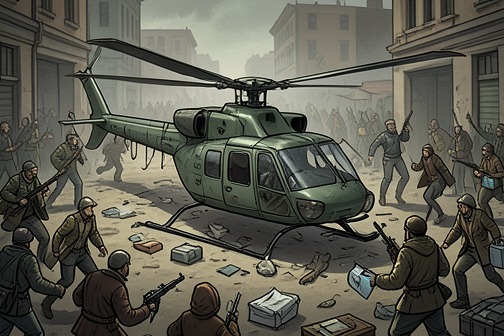
The downing of [Super 61](entity:object-recall-object-super-61-3388b6fafd19) turned a low orbit over central [Mogadishu](entity:location-recall-location-mogadishu-2b8d2d4a4b85) into a race to reach a crashed helicopter before the surrounding crowd could get to its crew. The strike did more than remove an aircraft: it broke the Rangers’ sense that their helicopters could keep gunmen at a distance.
## The strike and the crash
Just after gunner [Shawn Nelson](entity:character-recall-character-shawn-nelson-b7b7142c2523) had fired his [M60 machine gun](entity:object-recall-object-m60-05eb0e97454c) into a crowd, he heard a [Black Hawk helicopter](entity:object-recall-object-black-hawk-helicopter-51641d62e077) approaching. It was Super 61, piloted by Cliff Wolcott, whose men called him Elvis for the hair, walk, and manner he borrowed from his musical idol. Wolcott had delivered a Chalk of Rangers and was now flying low over the target area. The helicopter’s crew chiefs fired mounted miniguns at targets below, while two commandos in the rear selected gunmen. Overhead, the aircraft gave soldiers on the ground a sense of protection.
Nelson saw a flash and a puff as a rocket rose into Super 61’s path. The impact cracked its tail boom; its rotor stopped with a grinding sound, followed by a coughing chug. The helicopter shuddered and began to spin, slowly at first, then faster as it passed over the Rangers. It struck the top of a house, tilted, and flipped into an alley, crashing on its side. Nelson could not look away, while Private John Waddell forced himself to turn back toward his corner and watch for gunmen.
Nelson immediately urged the Rangers to move: the six men inside the helicopter needed help before Somalis reached them. The news spread across the radio in overlapping, frightened voices, replacing the controlled monotone expected of military transmissions. The crash was a sudden rupture in the soldiers’ confidence: the Black Hawks and Little Birds had been their strongest means of keeping armed opponents at a distance, and now one had fallen in the city.
## A rescue mission amid civilians and confusion
The fallen helicopter turned the Rangers’ immediate problem into a race against the armed crowds gathering in Mogadishu. The rules of engagement permitted them to shoot only at people pointing weapons at them, but armed men were mixed among women and children, while residents streamed toward the fighting to witness it. The account also notes that the summer’s Ranger missions had stirred widespread hatred, placing the soldiers inside a hostile crowd whose members could not easily be distinguished by appearance alone.
The ground convoy was supposed to reach Wolcott’s crash site, rescue the crew, and then continue about a mile south to Mike Durant’s downed Super 64. Instead, it struggled to find its way through streets where gunmen could move parallel to the vehicles and prepare to fire at each intersection. Two five-ton trucks and six Humvees stopped and darted across junctions, giving an estimated fifteen gunmen time to get ahead of them and set up ambushes.
The aerial view did not translate cleanly into directions on the ground. U.S. Navy Orion pilots and helicopter crews tried to steer the convoy around gunfire, but the Orion pilots could not speak to the vehicles directly: instructions had to pass through the Joint Operations Center at the beach. By the time a turn reached the drivers, they could have passed the intended street and taken a wrong one. From the command screens, moreover, the convoy appeared to move in an orderly fashion; the images did not convey the gunfire and blasts that made its progress desperate.
The convoy’s own command arrangements compounded the delay. Lieutenant Colonel Danny McKnight, accustomed to commanding a battalion rather than a line of vehicles, relied on directions from the aircraft and had not told the drivers where they were headed. If the lead vehicle was hit, the others therefore lacked the information needed to continue independently. At intersections, inexperienced drivers stopped in ways that exposed the vehicle behind them to crossfire. Each halt brought more people out to guard the column, and some of those who returned to the vehicles were smeared with the blood of the wounded they had carried.
The peril of distinguishing a threat from a civilian became stark during the drive. As a woman in a flowing purple robe ran beside a truck holding a baby, Specialist Eric Spalding shouted to the driver not to shoot. The woman turned and raised a pistol with her free hand. Spalding shot her, then fired four more rounds as she fell; moving quickly, he could not tell whether the baby had been hit, though he thought it probably had. The scene does not resolve the terrible uncertainty for him: the infant remained in front of the armed woman, and the convoy drove on without his learning its fate.
## The return and its civilian aftermath
The effort to recover the men at the crash sites ended in a retreat through the same streets that had trapped the vehicles. By then, Sergeant Sizemore described the rules of engagement as off. He saw boys about seven or eight years old, some carrying weapons and others not, and shot them; he also fired into crowds of women moving alongside riflemen. His account marks a severe change from the earlier restriction to fire only at people pointing weapons: numb, angry, and focused on getting his friends back, he said he no longer cared whether he was hit or how many Somalis he struck. The impulse to protect fellow soldiers had narrowed his attention as the boundary between combatants and civilians became harder, and then seemingly impossible, for him to maintain.
The column kept firing down the alleys until it came within blocks of the airport gate. There, the battlefield appeared to stop abruptly: people moved through open-air markets, strolling and talking as if the fighting had not happened. The battered vehicles passed through the crowds, carrying dead and wounded men alongside soldiers still shaken by the ordeal. In the last hundred yards to the gate, the Somalis in the street turned toward the column, grinned, and applauded—a response that left Specialist Squeglia unable to believe what he was seeing. The return to safety did not produce a simple image of victory or defeat; it ended in a public encounter between a wounded force and a crowd whose reaction the soldiers could not readily interpret.
A civilian account gives that passage through the city another scale. Abdikarim, who had left home to learn what was happening near the market, encountered dead men, women, and children in the street. He saw an American soldier bleeding from the leg and trying to hide; when a woman ran in front of him, the soldier fired in their direction, and she was hit but got off the street. A [Little Bird helicopter](entity:object-recall-object-little-bird-8ab74f164405) then swept down the alley firing, with bullets kicking dust past Abdikarim as he pressed himself against a stone wall. After it passed, armed Somali men ran toward a corner from which they could shoot at the Americans. Abdikarim fled to a friend's house and spent the night on the floor with others, listening to shooting instead of sleeping. His brief passage from a search for news to shelter under fire makes clear that the rescue and retreat unfolded not on an empty battlefield, but through streets shared by armed men and civilians exposed to the same violence.
## Fractured signals and battlefield time
The communications problems had begun before Super 61 fell. A bullet had severed the antenna wire on Moore’s radio without the men realizing it, so he could not reach Mike Steele. After repeated attempts, Matt Eversmann got through to Steele’s lieutenant, Larry Perino, and reported that Todd Blackburn had fallen and was badly injured. The delay left Eversmann trying to convey urgency without causing alarm even as the situation around his men deteriorated. In the battle that followed the helicopter’s loss, communication was not simply a matter of getting a message through: it determined which danger commanders believed they were addressing.
The growing number of crash sites made that distinction consequential. At one point, directions from command concerned the second crash site, while Danny McKnight’s convoy was still searching for the first; he was told that his vehicles appeared to be about four blocks too far west and five blocks too far south. The episode condensed the rescue’s larger confusion into a mismatch between the map in command and the task on the streets. Meanwhile, the passage of time itself became difficult to judge for the men on the ground: events seemed to happen at twice normal speed, yet each second within Eversmann’s immediate awareness felt like a minute. The crash therefore altered more than the mission’s route and stakes. It unfolded inside a battle in which signals, locations, and even the duration of events no longer aligned reliably.
Event 3
Black Hawk Super 64 shot down
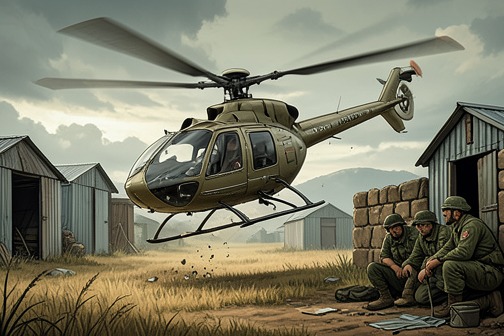
Black Hawk Super 64 was shot down while taking the place of [Super 61](entity:object-recall-object-super-61-3388b6fafd19) over [Mogadishu](entity:location-recall-location-mogadishu-2b8d2d4a4b85), turning an already unfolding helicopter emergency into a second, isolated crash-site crisis. A rocket-propelled grenade damaged the aircraft’s tail assembly; after it initially remained flyable, the failure became catastrophic, sending the helicopter spinning into a field of tin huts. Its upright landing left the crew alive, but the only airborne rescue team was already at Super 61, and Somali fighters were closing in on the new site.
## Formation and the strike
Super 64 had not been in orbit over the target area long enough to synchronize with the other helicopters. Mike Durant was still working into the position vacated by Cliff Wolcott’s Super 61, which had been shot down only minutes earlier and lay smoldering on the ground. Mike Goffena, piloting Super 62, was moving up behind Durant’s aircraft as the formation adjusted around the first loss.
Goffena saw the rocket-propelled grenade strike Super 64’s gearbox. The explosion tore away part of it and sent the helicopter’s oil streaming out in a fine mist. Yet the aircraft remained intact, and its systems appeared to be functioning. From outside, the damage looked serious but not immediately decisive; from the cockpit, the size of the Black Hawk and the distance between Durant and its tail made it difficult to know what had happened. Goffena radioed to ask whether Durant was all right, then explained that the aircraft had been hit and that its tail area was damaged.
## Tail failure and loss of control
Durant steered the crippled aircraft southeast over Mogadishu, toward the Indian Ocean and the base. Goffena followed for perhaps a mile, having decided that he would accompany his friend and the other men aboard at least part of the way home. He had been providing cover for the target building and Super 61’s crash site; he had also seen the rescue team descend there by rope and the ground forces preparing to leave. After judging that Super 64 might make it back, he began to turn away. Then the tail rotor assembly, its gearbox, and part of the vertical fin blurred and came apart.
Inside the cockpit, Durant and copilot Ray Frank felt rapid vibration and heard the dry gear shaft whining before a loud bang. With much of the tail fin gone, the helicopter’s balance shifted abruptly forward. The nose dropped and the aircraft began to spin to the right. Durant pushed the left pedal down, the control that would normally swing the aircraft left, but the Black Hawk continued rotating. Without the tail rotor to counter the main rotor’s torque, his familiar flying response could not stop the spin. Through the windshield, sky and earth flashed past in a blur.
The aircraft was roughly 75 feet above the ground when Goffena saw it spin ten or fifteen times in the seconds before impact. Durant was working the controls; Frank, despite the centrifugal force, managed to reach the engine controls mounted on the cockpit roof. Pilots trained in simulators to eliminate torque by shutting off the engines, and Frank succeeded in moving one engine switch to idle and turning the other halfway off. Durant radioed that the helicopter was going down hard.
## Crash and isolation
Super 64 struck a warren of flimsy tin huts rather than one of Mogadishu’s stone buildings. It did not hit hard enough to overturn. The Black Hawk’s shock absorbers could withstand a severe impact if the aircraft landed upright, and Super 64 did. That posture helped the crew survive the crash, but it did not make their position safe.
The crash site was about a mile from the commandos and [United States Army Rangers](entity:organization-recall-organization-united-states-ar-7a8e52e212bb) near the downtown target area. Super 61 had come down only a few blocks from those American forces, but the only airborne search-and-rescue team had already fast-roped to Wolcott’s aircraft. There was no second team ready to reinforce Durant’s crew. No one had seriously planned for two helicopters to be shot down, leaving the rescue capacity concentrated at the first crash site just as a second emergency began.
Goffena made a low pass over the wreck and saw Durant pushing at a section of tin roof that had collapsed around his legs. He was relieved to see Durant alive. He also saw Frank’s frustrated expression: Frank had previously survived a tail-rotor crash during a training mission, one that broke his leg and injured his back and led to a continuing legal battle. The new crash had brought him back to a kind of disaster he had already endured.
## A second crisis in the battle
From above, Goffena could see Somalis spilling into the alleys and footpaths leading toward the downed helicopter. Super 64’s crew was therefore separated not only from its fellow American forces but also from the rescue team already committed elsewhere, while people converged on the wreck. The contrast with Super 61 was stark: the first crash had drawn the available rescue force; the second left the men at a more distant site without an easy way to strengthen their position.
That vulnerability belonged to a wider battle in which the rules governing fire were already under strain. United States Army Rangers had been instructed to shoot only at people pointing weapons at them, but armed people were intermingled with women and children, and crowds were gathering around the fighting. Super 64’s loss was not simply an aircraft failure in isolation: it created another exposed point in an urban fight where the force’s ability to rescue its own men was limited, while armed Somalis were moving toward the crash site. The helicopter remained upright, and its crew survived the impact, but the immediate problem had shifted from keeping the aircraft in the air to reaching men stranded far from the forces and rescuers already engaged elsewhere.
Event 4
Mike Durant captured by Somali militia
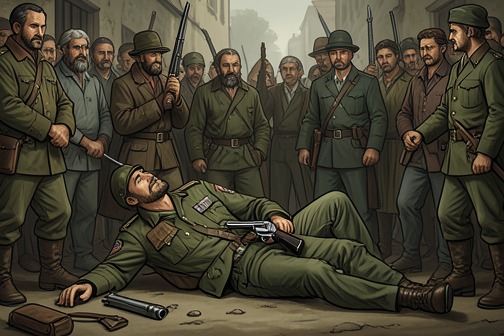
[Mike Durant's capture](entity:action-recall-action-72cc360f6f39) began in the silence after the crash, when he had run out of ammunition and believed his crew was dead. His surrendering gesture brought him within reach of an angry crowd, but militia leader Yousuf Dahir Mo'Alim saw a captive with potential value and shielded him from immediate revenge.
## The Crash Site and Surrender
As the crowd approached the wreck, Durant heard the debris being pushed aside and noticed that the shooting had stopped. He concluded that the others must be dead. He knew the rumors about what had happened to soldiers captured by angry Somalis, including a story that people had played soccer with the heads of downed pilots. His second weapon was empty. Although he still had a pistol strapped to his side, he did not reach for it; he believed the outcome was already decided.
When a Somali came around the helicopter’s nose and shouted, others ran toward Durant. He placed his empty weapon across his chest, folded his hands over it, and looked up at the sky. At another point in the clearing, Mo'Alim and his men had attacked American soldiers after surrounding them; following a furious exchange of fire, the crowd had surged in. Mo'Alim then discovered Durant and another American near the helicopter’s tail. Durant was alive and did not shoot. His posture repeated the gesture of surrender, but the crowd still rushed at the two men, kicking and beating the pilot.
Mo'Alim abruptly intervened. He grabbed Durant’s arm, fired into the air, and shouted for the crowd to stay back. When one of his own men struck Durant in the face with a rifle butt, Mo'Alim pushed the man away. He judged that Durant would be more valuable alive: the Rangers had captured and held Somalis, and a living American might be exchanged for them, perhaps for all of them. That calculation turned the capture from an imminent killing into a contested act of protection.
Mo'Alim and several of his men formed a ring around Durant to keep the revenge-seeking crowd away. Other fighters stripped off Durant’s clothing because they feared he might have concealed weapons and knew that pilots carried beacons that could help helicopters locate them. Durant’s nose was broken and the bone around his eyes shattered by the blow. As the men struggled with the unfamiliar plastic snaps on his gear, he reached down and opened them himself; they removed his boots, survival vest, and shirt while continuing to kick and hit him. Even as Mo'Alim’s men guarded him, Durant remained exposed to violence and dependent on the militia leader’s decision to keep him alive.
## Civilians, Combatants, and the Rules of Engagement
The capture took place amid a battle in which armed fighters and civilians were difficult to distinguish. [United States Army Rangers](entity:organization-recall-organization-united-states-ar-7a8e52e212bb) had been instructed to fire only at someone pointing a weapon at them, but armed people were mingled with women and children. Crowds also streamed toward disturbances in [Mogadishu](entity:location-recall-location-mogadishu-2b8d2d4a4b85), including the fighting around the helicopters; the account describes people arriving to witness events even as the crowds themselves grew dangerous. The rule was clear in principle, but the street offered no clean division between combatant and bystander.
A convoy encounter makes that difficulty concrete. As the vehicles crossed an alley, a woman in a flowing purple robe ran beside a truck carrying a baby. Spec. Eric Spalding called out to the driver not to shoot because she had a child. The woman then turned and raised a pistol with her free hand. Spalding shot her five times; the convoy moved on before he could tell whether the infant had been hit, though he feared it had. The scene turns on an abrupt reversal: the child first appeared to make the woman a protected bystander, then the weapon changed what the soldiers could see and do, without resolving the baby’s fate.
Elsewhere, the response to the fighting moved further from the stated restraint. After a vehicle column fought its way through the streets, the account describes the rules of engagement as abandoned. Sizemore fired at young boys, some armed and some not, and at crowds of women moving alongside men with rifles. He was numb and angry, focused on getting his fellow soldiers back safely. That motive explains his immediate frame of action without erasing the civilians among those he shot; the episode marks how fear for comrades and indiscriminate violence could occupy the same moment.
Abdikarim’s account supplies another view of the streets: he saw dead men, women, and children, an American soldier bleeding beside the road, and a woman hit when the soldier fired toward her. A [Little Bird helicopter](entity:object-recall-object-little-bird-8ab74f164405) then swept down an alley firing, while armed Somali men ran toward a corner from which they could shoot at the American. These scenes do not make the city’s civilians a single, uniform crowd. They show instead how rapidly witnesses, residents, armed opponents, and people caught between them became entangled in the fighting surrounding Durant’s capture.
## Disarmament and the Terms of Survival
The stripping of Durant was also a practical attempt to deny him any means of signaling or fighting back. His captors knew that American pilots wore beacons in their clothing, and they feared he might have other weapons hidden on him. They removed his boots, survival vest, and shirt, leaving him without the equipment that might aid his escape or help rescuers locate him. Durant kept his eyes fixed on the sky while the Somalis shouted around him, words he could not understand.
The scene’s small physical details make the limits of Mo'Alim’s protection plain. Durant’s gear had plastic snaps unfamiliar to the men, so he reached down and opened them himself as they stripped it away. A fighter began unzipping his trousers but zipped them again when he saw Durant wore no underwear; his brown T-shirt remained on. All the while, Durant was still being kicked and struck. The ring of militia fighters kept the crowd from killing him, but it did not make him safe: his survival depended on their control of the mob and on Mo'Alim’s judgment that a living American could serve as leverage for Somali prisoners.
## From Intended Victim to Captive
The capture turned on a sudden change in how the militia leader read the scene: while the crowd treated the pilot as an object of revenge, Yousuf Dahir Mo'Alim recognized a possible exchange for Somalis held by the Rangers. His intervention did not end the violence or amount to a secured bargain; it shifted Durant into a precarious new status, alive because his captor believed he could be useful. The distinction is central to the episode: survival came neither through a successful defense nor through the crowd’s restraint, but through a calculation that made a helpless American more valuable than a dead one.
Event 5
Mogadishu battle of October 3–4, 1993
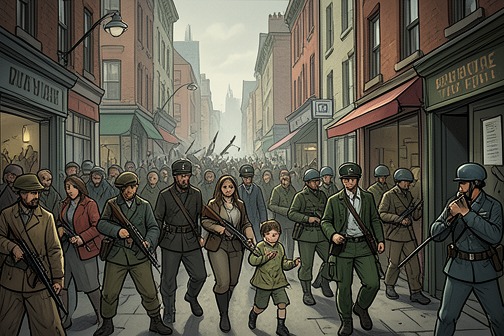
The [Mogadishu battle of October 3–4, 1993](entity:event-recall-event-1993-7cc7fef5740e), transformed a capture mission into a prolonged urban battle in which soldiers confronted not only armed opposition but also the difficulty of distinguishing combatants from civilians in crowded streets. Its immediate violence and the choices made under fire would become inseparable from the rescue effort, the heavy casualties, and the decision to end the American mission in [Somalia](entity:location-recall-location-e9f8e868ef14).
## Escalation and the Collapse of Distinction
The firefight drew people toward it from across [Mogadishu](entity:location-recall-location-mogadishu-2b8d2d4a4b85). Surveillance cameras watched crowds build barricades and light tires to summon help, while armed people rushed toward the helicopters marking the fighting. On the ground, Eversmann’s men faced gunmen darting through alleys and crowds farther up [Hawlwadig Road](entity:location-recall-location-hawlwadig-00faa816e416). The Rangers’ rules of engagement permitted them to shoot only at someone pointing a weapon at them, but armed people were mixed among women and children. The book describes the crowds as a feature of local responses to disturbances and notes that Ranger missions over the preceding summer had stirred widespread hatred.
That boundary became especially immediate for Eric Spalding’s vehicle as it crossed an alley. A woman in a flowing purple robe ran past with a baby on her arm; Spalding warned the driver not to shoot because she had a child. The woman turned, raised a pistol with her free hand, and Spalding shot her. He fired four more rounds as she fell, then, unable to see what had happened to the infant, feared he had hit the baby too. The episode captures the perilous speed of decisions in the street: the child was visible, but so was the weapon, and there was no time to resolve the uncertainty before firing.
As the fighting and losses accumulated, the restraints described at the outset gave way for some soldiers. On the drive back to base, Dale Sizemore shot young boys whether or not they carried weapons and fired into crowds of women alongside armed men. He was numb, angry, and intent on protecting his friends by doing whatever he could to get them back safely. The shift from a rule focused on an observed threat to indiscriminate fire marks one of the battle’s starkest changes: the same crowded streets that had made restraint difficult became the setting for its abandonment.
## A Civilian's View of the Fight
The battle was not experienced only from the Rangers’ side of the streets. Abdikarim had initially stayed inside as shooting spread, but neighbors told him the Rangers had captured Aidid, and he went toward the market to learn what had happened to relatives who lived nearby. The streets offered no clear account: dead men, women, and children lay along the road, while the violence continued around them.
Abdikarim saw an American soldier bleeding from the leg and trying to hide beside the road. When a woman ran into view, the soldier fired in their direction; she was hit but managed to get off the street. A [Little Bird helicopter](entity:object-recall-object-little-bird-8ab74f164405) then swept low through an alley, firing as bullets kicked dust past Abdikarim against a stone wall. Once it had passed, armed Somali men ran down the alley toward the corner from which they could shoot at the American. For Abdikarim, the scene made civilian presence, armed resistance, and incoming fire impossible to separate into safe categories: he had come seeking news of family and found himself exposed between opposing forces.
He judged that going out to see the fighting had been a mistake. Abdikarim fled to a friend’s house, where the occupants huddled on the floor; shooting continued throughout the night, and no one slept. The city’s battle therefore extended beyond the immediate clash and rescue attempts: even a resident who withdrew from the streets remained under fire, unable to know when the violence would end.
## Fear, Duty, and the Rescue Effort
The battle reached the men waiting at the base first as radio traffic: reports of Cliff Wolcott’s [Black Hawk helicopter](entity:object-recall-object-black-hawk-helicopter-51641d62e077) going down, then of Mike Durant’s, followed by news that the convoy carrying Todd Blackburn had returned with its vehicle riddled by gunfire and Sgt. Dominick Pilla dead. The wounded Blackburn was motionless, with blood around his mouth. For Steve Anderson, who had already been wounded by shrapnel in his legs on an earlier mission, the accumulating reports made the battle feel less like an abstract call to duty than a danger that had already taken friends and could take more. His friend Dale Sizemore was eager to join the rescue; Anderson felt sick with fear and hid his reluctance.
Brad Thomas faced a more direct choice. Pilla had died in Thomas’s lap during the convoy’s return, leaving him soaked in his friend’s blood. Although Thomas had decided to go back into the city, he later told Struecker that he could not do it. Struecker, a model Ranger expected by the watching men to respond by the book, instead spoke to him quietly and acknowledged that he, too, was afraid. He framed courage as acting while afraid and reminded Thomas that going was their job. Thomas walked away, but when the vehicles were about to depart, he had climbed aboard. The exchange showed how unit expectations could press a frightened soldier forward, while the private conversation gave that demand a human measure rather than making fear disappear.
At the crash-site positions, the immediate problem was not simply reaching the wounded but keeping them alive until help could get through. Nearly three hours into the mission, men gathered in a house roughly a block from Wolcott’s wreck, where a makeshift command post and a growing group of wounded had formed. Commanders judged helicopter evacuation too dangerous. By dusk the ground convoy expected at the crash site had not arrived; the men had seen its vehicles pass several blocks away and understood that it was lost and badly mauled. Darkness threatened to remove another advantage: most had left their [Night optical devices (NODs)](entity:object-recall-object-nods-ab0ff55aaf56) behind, assuming the midday mission would last only an hour, and many had gone without canteens.
The next effort to move men out exposed the cost of decisions made under pressure. Mike Steele ordered Sean Watson to prepare to leave, but Watson challenged the order bluntly. Five wounded men needed evacuation, two of them on litters, and the body of [Earl Fillmore](entity:character-recall-character-earl-fillmore-106b9df40bc1), a Commando sergeant first class shot in the head, also had to be carried. Four bearers would be required for each litter, creating conspicuous groups in the open; Watson argued that the defended courtyard was difficult to overrun and that stepping outside would invite bullets and grenades. His objection was not a refusal of the rescue mission but a warning that its proposed method could expose the wounded, the dead, and their rescuers to still greater danger.
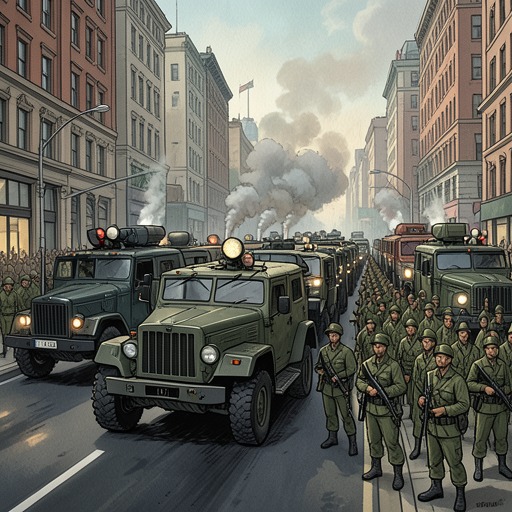
The broader relief force faced its own urgent constraints. More than five hours into the battle, [Bill David](entity:character-recall-character-bill-david-51ba42464873), ground commander of the Quick Reaction Force, was assembling a multinational column of about 150 men in nine flatbed trucks and a dozen Humvees. Wounded Rangers in the city might die without prompt relief, but the convoy had already tried to reach the southern crash site and been forced back at K-4 Circle, more than a mile short, by a heavy ambush. As the night wore on, Mike Steele’s men had been pinned down for more than nine hours; the shooting had largely subsided, but the approaching thunder of the rescue column’s guns was the sound they watched for. The D-boys, meanwhile, had returned early to the hangar and were cleaning weapons, checking equipment, and replenishing ammunition, ready to go back out. Relief was being organized amid exhaustion and uncertainty, not after the danger had passed.
## Political Consequences and Commemoration
The battle quickly became a crisis in Washington as well as a fight in Mogadishu. The day after the raid, Secretary of Defense Les Aspin and Secretary of State Warren Christopher faced angry questions from Congress about how American soldiers had come to be dying in Somalia. [Bill Clinton](entity:character-recall-character-bill-clinton-7fedda7b8056), who had not been briefed in advance because the mission had been mounted so quickly, was angry and wanted answers about both policy and military tactics. At a six-hour meeting on October 6, officials confronted the scale of the loss: eighteen American soldiers dead and seventy-three wounded, hundreds of Somalis dead, and Mike Durant still captive. With public outrage mounting and Congress demanding withdrawal, continuing the campaign to capture [Mohamed Farrah Aidid](entity:character-recall-character-mohamed-farrah-aidi-e13ea17ccdff) was judged politically impossible, despite military assessments that his forces had been badly weakened. The decision was to reinforce Task Force Ranger, end efforts to capture Aidid, and withdraw the force by March 1994.
The toll gave the battle its lasting weight. It was the largest firefight involving American troops since the [Vietnam War](entity:time-recall-time-vietnam-war-e7a08391fc30), with more than 500 Somalis dead and at least 1,000 injured. The immediate objective had been to capture Omar Salad and Mohammed Hassan Awale, men who remained little known after the fighting, while the cost of pursuing that objective reshaped the American mission. President Clinton later accepted [Robert Oakley](entity:character-recall-character-robert-oakley-d5aeb51f1ec6)’s appeal on behalf of Somali leaders and ordered the release, several weeks afterward, of every Somali captured by Task Force Ranger. By the end of the month, every American who had fought was home.
The meaning of October 3 remained contested. Many people in Mogadishu commemorate it as [Ma-alinti Rangers](entity:concept-recall-concept-ma-alinti-rangers-4d3ce2961cc2), or [The Day of the Rangers](entity:expression-recall-expression-the-day-of-the-ran-53da89afb467), and regard it as a national victory. The book presents that commemoration against a price borne on both sides, making victory, if either side could claim it, a Pyrrhic one. Colin Powell, who had approved sending Task Force Ranger to Mogadishu, later maintained that the soldiers had done nothing wrong militarily and that they had suffered an unexpectedly bad afternoon; his comparison with the vastly greater weekly American death toll at the height of the Vietnam War also exposed how differently the same number of casualties could be measured. Aidid was killed in factional fighting in 1996, the same day General Garrison retired from the Army, but that later coincidence did not reverse the political consequence already set in motion: the battle effectively ended America’s mission in Somalia.
Event 6
Super 61 crash and recovery
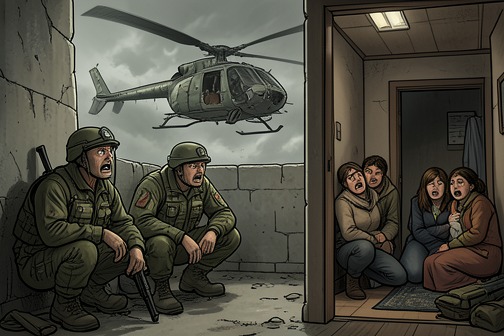
The [Super 61 crash and recovery](entity:event-recall-event-super-61-77bf6946e79a) left [United States Army Rangers](entity:organization-recall-organization-united-states-ar-7a8e52e212bb) and Commando soldiers pinned around a wrecked [Black Hawk helicopter](entity:object-recall-object-black-hawk-helicopter-51641d62e077) in [Mogadishu](entity:location-recall-location-mogadishu-2b8d2d4a4b85), trying to treat the wounded and retrieve the dead while under fire. The crash site became more than a rescue scene: as the ground convoy failed to reach them and evacuation by helicopter was judged too dangerous, nearby buildings became makeshift strongpoints and the trapped force faced the prospect of being cut off.
## Crash Site and Immediate Response
Several groups of United States Army Rangers and Commando soldiers linked up at the wreck, where intense small-arms fire and rocket attacks pinned them down. Most took cover along a wide street that formed an L at the crash-site intersection. At the helicopter, the search-and-rescue team gathered the wounded and worked to extricate pilot Cliff Wolcott’s body from the wreckage.
To get the men off the exposed street, Sgt. [Paul Howe](entity:character-recall-character-paul-howe-7f07a22906e8) and another soldier forced their way into a narrow courtyard between two houses. They found a terrified family—a man, his wife, and several children—cowering in a room. Howe coaxed them out, searched them, and handed them to his team, who handcuffed them and moved them into a side room. Once the adjoining rooms had been cleared, Howe waved in Capt. [Scott Miller](entity:character-recall-character-scott-miller-bea79b32332a) and the other soldiers. Miller, who had caught up with Howe on the run to the crash site, used the courtyard as a command post and casualty collection point.
The position offered shelter, but not a way out. Nearly three hours into the mission, the soldiers feared they would be stuck there all night, separated from other groups pinned down near the wreck. Commanders had radioed that the fire made it too dangerous to land a helicopter and evacuate the wounded. The rescue problem had become a siege: the men needed to hold their position while the wounded and Wolcott’s body remained at the center of the effort.
## Nightfall, Recovery, and the Aftermath
The men at the wreck remained pinned down for more than nine hours. By the time the moon was high, the shooting had mostly subsided, but the perimeter was not secure: Somalis still wandered into it, and Commando soldiers sometimes let them approach before shooting them. [Little Bird helicopters](entity:object-recall-object-little-bird-helicopter-a644d79e92dc) returned periodically to fire rockets and miniguns. For Mike Steele, the sound that mattered most was the growing thunder of guns as the rescue column drew nearer.
Recovering Cliff Wolcott’s body proved a separate ordeal. Soldiers spent hours trying to free him from the wrecked Black Hawk helicopter. A quick saw could not cut through the Kevlar lining the cockpit, so they tried pulling the aircraft apart with chains attached to its front and back. Some Rangers watching from a distance thought the vehicles were being used to tear Wolcott’s body out and turned away. The dead were eventually laid on top of armored personnel carriers, while the wounded were loaded inside; Sgt. Mike Goodale, shot in the thigh with a large exit wound in his buttock, had to hobble to an APC and be helped through its doors.
The rescue did not end the violence’s reach. Early the next morning, tired, bruised, and bandaged soldiers gathered around a television in the hangar to watch [CNN](entity:organization-recall-organization-cnn-fc1d8abce1ee). The broadcast showed jubilant Somalis bouncing on the rotor blades of Super 64, then showed a dead American soldier being dragged through the streets on a rope, kicked and prodded by the crowd. The images intensified the soldiers’ anger: Paul Howe prepared to return to the streets determined to kill, rejecting the rules of engagement he had previously been expected to follow. On October 4, the wider toll was reported as eighteen American soldiers dead, more than seventy wounded, and hundreds of Somalis dead; the images also reached President [Bill Clinton](entity:character-recall-character-bill-clinton-7fedda7b8056), who was horrified and demanded to know who had authorized the mission without informing him.
## Civilian Presence and the Collapse of Restraint
The crash-site fight unfolded in streets where armed men and civilians were difficult to separate. The Rangers had been told to fire only at people pointing weapons at them, but the rule became increasingly hard to apply as gunmen mixed with women and children. Crowds gathered around disturbances in Mogadishu, and the summer’s repeated Ranger missions had stirred widespread hatred. The danger at the wreck was therefore not confined to soldiers exchanging fire: civilians moved through the same streets and alleys, often close to armed fighters.
During the rescue movement, Spec. Eric Spalding saw a woman in a flowing purple robe dart beside a truck. Its driver was shooting at whatever moved, and Spalding shouted for him to hold fire because she had a child. The woman then turned with a baby on one arm and raised a pistol with her free hand. Spalding shot her, firing four more rounds after the first; the vehicles were moving too fast for him to see whether the infant had been hit. He thought he probably had hit the baby. The encounter concentrated the impossible choices of the street into a few seconds: a child visibly in the line of fire, a weapon raised, and no time to know what the shots had done.
By the return to base, restraint had given way to rage. After the vehicles survived a crash back onto all four wheels, the column shot its way through the streets; the account says the rules of engagement were off. Sizemore fired at young boys, some carrying weapons and some not, and at crowds of women running alongside riflemen. Numb, angry, and intent on getting his friends home, he no longer cared whether he was shot or whom he hit. Near the airport gate, the gunfire abruptly stopped. The battered column passed through open-air markets where people had been strolling as if the battle were elsewhere, and the crowd parted for the wounded, dead, and horrified soldiers before applauding them as they approached the gate.
Abdikarim’s experience records the same violence from the street rather than from a vehicle. After neighbors told him that the Rangers had captured [Mohamed Farrah Aidid](entity:character-recall-character-mohamed-farrah-aidi-e13ea17ccdff), he went toward the market to learn what had happened to relatives living nearby. He saw dead men, women, and children in the road, and an American soldier bleeding from the leg and trying to hide. When a woman ran in front of him, the soldier fired in their direction; she was hit but got off the street. A [Little Bird helicopter](entity:object-recall-object-little-bird-8ab74f164405) then swept down an alley firing, and Abdikarim pressed himself against a stone wall as bullets kicked up dust past him. Armed Somali men ran toward the corner to shoot at the American. Abdikarim fled to a friend’s house, where he and others stayed on the floor through a night of shooting without sleep. His route to the market, undertaken for news of family, became a close encounter with the battle’s indiscriminate hazards.
## Political Accountability
The battle’s political aftermath quickly turned toward the decisions behind the raid. The day after the fighting, members of Congress questioned Secretary of Defense Les Aspin and Secretary of State Warren Christopher about how the operation had unfolded and why American soldiers were dying in [Somalia](entity:location-recall-location-e9f8e868ef14). President Bill Clinton was asking similar questions of his aides, but with an added grievance: he had been briefed on missions in advance before, whereas this raid had been organized so quickly that he was not told beforehand. He wanted an account spanning both policy and military tactics.
On October 6, Clinton’s advisers and senior officials gathered first at the East Wing breakfast table and then in the Oval Office with [Robert Oakley](entity:character-recall-character-robert-oakley-d5aeb51f1ec6), who had long experience in Somalia but had not been consulted by the White House or State Department as events in Mogadishu developed. The meeting brought the consequences of the crash and the wider battle into a political inquiry over who had shaped the mission, how it had been authorized, and what the United States was trying to accomplish. The rescue had brought soldiers out of the wreck’s perimeter; it had not resolved the questions the operation left behind.
Event 7
Super 64 crash and crew capture
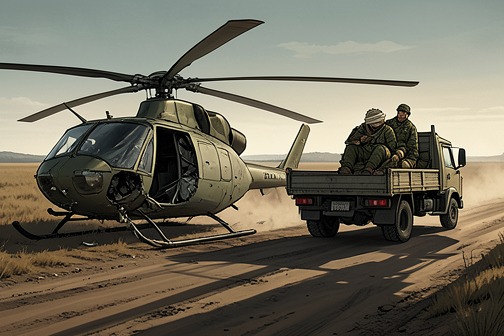
The [Super 64 crash and crew capture](entity:event-recall-event-super-64-a3dd5e1e5984) turned a helicopter loss into a separate struggle over the fate of its injured pilot, [Michael Durant](entity:character-recall-character-michael-durant-8f8d6ece56ed). After Somalis overran the downed crew and the two Commando sergeants who had tried to protect them, Durant was carried away alive. He did not know that the others were dead, and the rescue column that later fought its way through [Mogadishu](entity:location-recall-location-mogadishu-2b8d2d4a4b85) came close enough for him to hear it but not to reach him. His captivity therefore unfolded between an absent rescue and an uncertain prospect of survival.
## The Crash and the First Capture
The sequence began the previous evening, when the attackers overwhelmed the crew of the downed [Black Hawk helicopter](entity:object-recall-object-black-hawk-helicopter-51641d62e077) and the two sergeants defending them. Durant was injured in the crash: his right femur was broken, the bone had pierced his flesh, and he also suspected that he had crushed a vertebra. He passed out while being carried away, briefly experiencing the sensation of watching the scene from outside his body. When he came to, he was on the back of a flatbed truck with a rag tied around his head. The vehicle drove, stopped, and drove again; he estimated that roughly three hours passed between the crash and his arrival at the place where he would be held.
Durant’s first captors were not the men who kept him. Yousuf Dahir Mo'Alim, a neighborhood militia leader, had spared him from the attacking crowd. Mo'Alim’s men were carrying the pilot toward their village, intending to contact leaders of the [Habr Gidir clan](entity:organization-recall-organization-57b5c66e9d27). Because Durant could not walk, they had to transport him physically. On the way, a Land Cruiser carrying a large mounted gun intercepted them. Its occupants were freelance street fighters, described as bandits aligned with no clan. Outnumbered and outgunned, Mo'Alim’s men reluctantly handed Durant over.
That transfer changed the meaning of his captivity. The street fighters did not regard him as a war prisoner to exchange for captured Habr Gidir leaders; they regarded him as a hostage whose return someone would pay to secure. In the account’s description of Mogadishu, the larger guns decided who prevailed. If [Mohamed Farrah Aidid](entity:character-recall-character-mohamed-farrah-aidi-e13ea17ccdff) wanted the pilot back, he would have to pay for him. Durant himself knew none of this while being transported and chained.
## Chained During the Rescue
On Monday morning, October 4, Durant lay on his back on the cool tile floor of a small, windowless octagonal room. Cross-shaped openings cut into the concrete walls let in light and air, as well as the sounds of birds and children. The room had no furniture and one closed door. Its faint signs of ordinary life seemed at odds with the violence of the previous night, but they did not tell Durant where he was. He wondered whether the birds meant that he was near a garden house and whether the children’s voices belonged to an orphanage in northern Mogadishu.
A metal dog chain bound his hands together over his stomach. During the night he worked one hand free: sweat made it slide out when he relaxed it. The small escape gave him a first sense of triumph and let him wipe dirt from his nose and eyes, adjust his broken leg, and make himself slightly more comfortable. He then put his hand back into the chain so his captors would not notice. The gesture offered no route out, but it gave him a modest measure of control over a body he could not freely move.
The pain in his leg was not his chief concern. He could feel blood inside his trousers where the broken bone had torn through his flesh, but reasoned that he was still alive and that the bone had not severed an artery. His back troubled him more because he thought a vertebra might have been crushed. He had not slept. Frightened, thirsty, and uncertain of his location, he was nevertheless calmer in the morning light than at any point since the crowd had closed around him.
## The Column Passes By
During the night, the chained pilot heard the roar of a huge U.S. rescue column fighting its way into the city. Armored personnel carriers passed close outside, and gunfire erupted nearby. For a moment he thought the Americans might be coming for him—or that he might be killed in the fighting. The sound grew more intense as the battle approached. He heard the pounding of a [Mark 19 grenade launcher](entity:object-recall-object-mark-19-dd58fa00525a) and explosions that he thought sounded like TOW missiles. Having never before been on the receiving end of such a barrage, he was shaken by its force.
The men guarding Durant became increasingly agitated as the fighting drew nearer. Several times they burst into the room to threaten him. One spoke English and told him that because he killed Somalis, he would die in [Somalia](entity:location-recall-location-e9f8e868ef14). Durant could not understand the rest of what the men said, but gathered that they intended to shoot him before the approaching Americans could take him back. The threat made the nearby battle more than a distant possibility of rescue: it also increased the danger that his captors would kill him first.
The guards were young, and their weapons were rusted and poorly maintained. Durant listened with terror and hope as the fighting seemed to move toward him. Then the sounds marched on and faded. Their departure brought no rescue; it left him feeling abject because the Americans had come so close. The scene makes the failure immediate and physical: the column’s passage is registered not as a report of its route but as gunfire heard through the walls by a man chained on the floor.
## A Shot at Dawn
After dawn, birdsong, children’s voices, and sunlight again eased Durant’s fear. He felt safer than at any moment since the crowd had surrounded him, though he remained captive, injured, and thirsty. That brief improvement ended when a gun barrel appeared around the door. He turned toward it as it fired. The round struck the floor first and ricocheted into his left shoulder without fully penetrating; a piece of shrapnel entered his left leg. The shot renewed his injuries while leaving him alive in the room.
Durant slipped his hand out of the chain and reflexively tried to wrench the bullet from his shoulder. The round was still hot enough to burn his fingertips, and pain made him recoil. The incident ends this episode not with escape or recovery but with another immediate lesson in the hazards of captivity: even the small freedom he had managed to win for one hand could not protect him from the gun at the door. The rescue column had passed, his captors still controlled his movement, and his fate remained unresolved.
Event 8
Gary Gordon and Randy Shughart defend the crash site
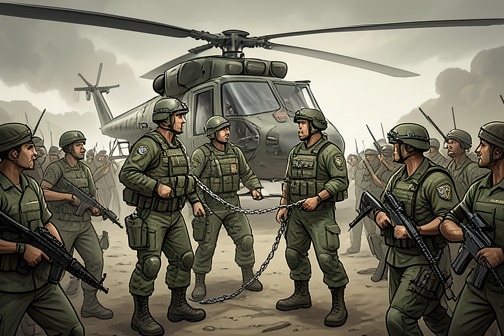
[Gary Gordon](entity:character-recall-character-gary-gordon-d4f34574ba6f) and [Randy Shughart](entity:character-recall-character-randy-shughart-8fe2c439f52c) defended the crash site of [Michael Durant](entity:character-recall-character-michael-durant-8f8d6ece56ed)’s helicopter in [Mogadishu](entity:location-recall-location-mogadishu-2b8d2d4a4b85) after it went down and Somali fighters overwhelmed the crew. Their stand ended in both men’s deaths, while Durant survived as a captive without knowing what had happened to the others. The defense became one of the battle’s defining acts of sacrifice and was later recognized with the Medal of Honor.
## The crash and the decision to defend the crew
The account places Gordon and Shughart at the downed helicopter on the evening before October 4. By morning, Durant lay injured and bound in captivity, unaware that the two Commando sergeants who had fought to protect the crew were dead. His broken right femur had pierced his flesh, and his captors had bound his hands with a metal dog chain. In that small room, the gap between his survival and his ignorance of the others’ fate made the defense’s cost immediate, even before he could know its full extent.
The wider battle had already made the distinction between armed fighters and civilians perilously difficult. Rangers had been instructed to fire only at people pointing weapons at them, but armed men were mixed among women and children, and crowds gathered around the fighting. On a convoy route, Eric Spalding first warned a driver not to shoot at a woman carrying a baby; when she turned and raised a pistol, he shot her, then could not tell whether the infant had also been hit. Such encounters show the conditions surrounding the crash-site fighting without resolving the uncertainty and human cost that those conditions created.
## A battle beyond the crash site
The defense took place amid a city-wide fight in which fear, casualties, and confusion shaped the choices of soldiers well beyond the helicopter wreck. Dale Sizemore, unable to join the initial mission because his arm was in a cast, was eager to go out when the rescue effort formed. His friend Steve Anderson, wounded by shrapnel on an earlier mission, instead felt dread at the radio traffic and gunfire, though he hid it from the others. Their contrasting reactions reveal how the same battle could intensify one man’s desire to rejoin his friends while making another question whether he could face another exposure to danger.
Brad Thomas, who had ridden back with Dominick Pilla’s blood on him after Pilla was killed, told Struecker that he could not go back out. Struecker spoke to him privately, acknowledged that he too was afraid, and urged him to go because it was their job. Thomas eventually climbed aboard. The exchange does not describe Gordon and Shughart’s decision directly, but it places their defense within a unit culture where fear was openly present and action under fear carried exceptional weight.
## Death, uncertainty, and recognition
In the days after the battle, the men’s fates emerged unevenly. Gordon’s body was recovered, while Shughart remained missing after the other missing soldiers had been accounted for. Shughart’s wife, Stephanie, drew hope from the news that Durant was alive and captive, imagining that her husband might also have survived. She attended the funerals of other soldiers while waiting for news; when a car carrying a priest arrived at her home, she understood what the visit meant. The prolonged uncertainty was part of the event’s aftermath, not a reprieve from it.
Gordon and Shughart were awarded the Medal of Honor. The recognition gave public form to a defense whose immediate consequence had been their deaths and whose full meaning was initially unknown even to the surviving captive they had protected. Their action stands at the intersection of comradeship and loss: Durant lived, but the two men who fought for the crew did not return.
Event 9
Mogadishu rescue convoy operation
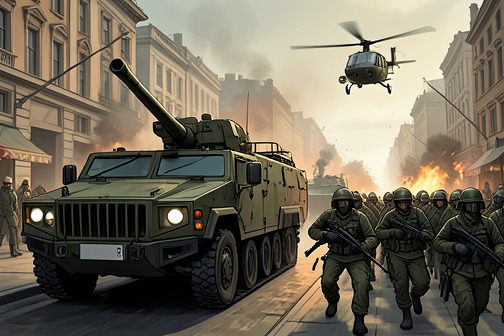
The [Mogadishu rescue convoy operation](entity:event-recall-event-da2e9f8a8cf6) was the belated, heavily armed effort to reach American forces trapped at two helicopter crash sites after an earlier attempt had failed. It turned a rescue into a night-long passage through ambushes and confused command, and its arrival brought not a clean escape but the difficult recovery of the dead and wounded.
## Urgency and assembly
More than five hours into the battle, Lieutenant Colonel [Bill David](entity:character-recall-character-bill-david-51ba42464873) understood that delay meant wounded Rangers in the city might die. The force he commanded had already tried to reach the southern crash site, where pilot Mike Durant and his crew faced being overrun. That daylight attempt made it only as far as K-4 Circle, more than a mile from the wreck, before a fierce ambush forced it back. The new mission therefore began with the knowledge that the first effort had not merely stalled: the people it was meant to rescue remained in immediate danger.
David was ordered to assemble a much larger force at the [New Port facility](entity:location-recall-location-4c9b08dbc8d1): four Pakistani tanks, 28 Malaysian armored personnel carriers, his own men, 150 soldiers from the 10th Mountain Division’s Alpha Company, a platoon of Ranger volunteers, and the ambulatory survivors of the lost convoy. The collection of units and vehicles offered protection and numbers, but assembling it quickly was itself a problem. Drivers had to be found who could operate five-ton trucks while wearing night-vision devices; soldiers had to be assigned to vehicles, and the multinational force had to be given a workable plan. Communication added friction because most Malaysian and Pakistani commanders spoke English, while their men did not, slowing the passage of decisions down the ranks.
David used a map illuminated by soldiers’ flashlights to explain his intended formation: put his better-trained soldiers aboard the Malaysian armored carriers, place the tanks at the front, advance between the two crash sites, and then send one company to each. The plan was not ready until 11:20 p.m. A Pakistani commander then told David that his force had orders not to lead. David negotiated a compromise: the tanks would escort the convoy through the first few miles, where roadblocks and ambushes were expected, and then withdraw so Alpha Company could take the lead in the carriers. The convoy finally moved, a coalition improvised under pressure before it had even entered the worst of the fighting.
## Fighting Through the City
The earlier convoy’s attempt to reach the first crash site exposed how little the view from above could control what was happening below. Navy aviators in helicopters and a surveillance aircraft tried to steer the vehicles around gunfire, but the Orion pilots could not speak to the convoy directly: instructions had to pass through the Joint Operations Center at the beach. By the time a direction such as a turn left reached the drivers, the convoy might have passed the intended street and turned onto the wrong one. On command screens, its movement seemed orderly; the images did not convey the bullets and blasts confronting the men in the vehicles. Lieutenant Colonel Danny McKnight, relying on aerial guidance, had not told the individual drivers where they were headed, so when the lead vehicle faltered, the rest could not simply continue along a shared route. Confusion over which crash site the convoy was seeking compounded the problem.
The night rescue column advanced into a city where the road itself could become an obstacle and a firing lane. As it neared the [Black Sea neighborhood](entity:location-recall-location-2d6af7cf1b71), the stronghold of [Mohamed Farrah Aidid](entity:character-recall-character-mohamed-farrah-aidi-e13ea17ccdff), Somali fighters launched fierce ambushes. The convoy’s two-mile length made its progress a spectacle as well as a target: soldiers at the first crash site could hear it approaching from miles away and see the glow of its weapons against the dark sky. Yet its size did not prevent it from losing its way. A Malaysian driver leading the northbound platoon stopped before a flimsy barricade, wary that it might be mined. Under fire, American soldiers eventually got out and began dismantling it by hand; Specialist Phil Lepre fired first over the heads of an approaching crowd, then into it as the people kept coming, and saw some fall before others dragged them away.
The force ultimately divided to pursue its two urgent objectives. One company headed west toward Super 64, where Somalis had overrun the wreck hours earlier; the other continued north to [Super 61](entity:object-recall-object-super-61-3388b6fafd19), where 99 Rangers and members of the assault force remained pinned down and waiting. The split converted a single, unwieldy march into separate efforts to reach both crash sites, but it did not make either approach safe. At Super 61, the men had been trapped for more than nine hours, and as the moon rose and the surrounding gunfire subsided, the growing thunder of the approaching rescue column was the sound they listened for.
## Extraction and Cost
At the first crash site, the approach of the rescue column brought relief to the men who had been pinned down for more than nine hours, but it did not end the danger. Captain Mike Steele knew the quiet was treacherous: the moon was high, most of the shooting had stopped, yet Somalis still wandered inside the perimeter around Cliff Wolcott’s wrecked helicopter. The soldiers sometimes let them walk farther in before shooting them, while [Little Bird helicopters](entity:object-recall-object-little-bird-helicopter-a644d79e92dc) returned with rockets and minigun fire. For Steele, the most consequential sound was the growing thunder of the rescue column drawing near.
Recovering Wolcott’s body became a painful operation in its own right. It took hours to free him from the wreckage. A quick-cut saw could not get through the Kevlar lining the cockpit, so soldiers tried to pull the helicopter apart by attaching chains to its front and back. Rangers watching from farther away mistook the effort for an attempt to tear Wolcott’s body out and turned away. The dead were eventually laid across the armored personnel carriers, while the wounded were loaded inside. Amid the relief of reaching the trapped force was the sight of [Earl Fillmore](entity:character-recall-character-earl-fillmore-106b9df40bc1)’s small assault boots atop a vehicle; [Paul Howe](entity:character-recall-character-paul-howe-7f07a22906e8) recognized them as belonging to his buddy, who had been shot in the head earlier.
Even after the rescue column reached the site and Wolcott’s body was freed, there was not enough room on the vehicles for the exhausted survivors who could still walk. They had to cover the half-mile back to National Boulevard on foot, running under fire, leapfrogging intersections, and shooting back down alleys. Only one Ranger, Randy Ramaglia, was badly injured on that stretch; he was taken by vehicle to the soccer stadium serving as the Pakistani headquarters. There, the field was covered with wounded men, while uninjured soldiers moved among the litters in tears or with stunned, distant expressions. Helicopters bearing red crosses carried the wounded onward to the main hospital by the hangar.
## Civilian Risk and the Public Aftermath
The rescue operation unfolded amid a crowd in which armed fighters and civilians were difficult to separate. The Rangers’ rules of engagement permitted them to shoot only at someone pointing a weapon at them, but the account describes weapons intermingled with women and children as crowds gathered around the fighting. In one alley, Specialist Eric Spalding first warned a driver not to fire at a woman because she had a child. The woman then turned with a baby on one arm and raised a pistol with her free hand. Spalding shot her, then fired four more rounds as she fell. The convoy was moving too fast for him to see whether the infant had been hit; he thought it probably had. The scene makes the rule’s severe practical test concrete: the baby was visible, but the woman’s weapon changed what the soldiers confronting her understood themselves to be facing.
On the battered column’s return to the base, one Ranger’s account marks a further change in how the soldiers responded to danger. The rules of engagement were off, and Sizemore described shooting at young boys, some armed and some not, and firing into crowds that included women alongside rifle-carrying men. He said he felt numb and angry, intent on striking as many Somalis as he could, and explained his determination through his bond with the Rangers he considered closer than family and his desire to get them back safely. The column fired through alleys until the shooting abruptly ceased near the airport gate. There, the soldiers encountered open-air markets and crowds moving as if nothing had happened; as the battered vehicles passed, people faced them, grinned, and applauded. The abrupt contrast did not erase what had happened in the streets, but it left the returning soldiers with an unsettling reception rather than a simple account of hostility or welcome.
The account also shifts from the soldiers’ view to that of Abdikarim, a [Mogadishu](entity:location-recall-location-mogadishu-2b8d2d4a4b85) resident who went toward the market seeking news of relatives. Neighbors had told him that the Rangers had captured Mohamed Farrah Aidid, a report that sent him out into a scene of confusion. He saw dead men, women, and children in the road, and an American soldier bleeding from the leg and trying to hide. When a woman ran in front of Abdikarim, the soldier fired in their direction; the woman was hit but got off the street. Abdikarim then pressed himself against a stone wall as a [Little Bird helicopter](entity:object-recall-object-little-bird-8ab74f164405) fired down an alley, with bullets kicking dust past him. After Somali men with rifles ran toward the corner to shoot at the American, Abdikarim fled to a friend’s house and spent the night on the floor with others, awake through the continuing gunfire. His passage from anxious observer to witness under fire gives the street fighting a civilian geography of relatives, neighbors, homes, and routes of escape.
In the early morning of October 5, the violence returned to the soldiers as television images. Wounded and exhausted Rangers and Commando soldiers watched [CNN](entity:organization-recall-organization-cnn-fc1d8abce1ee) footage of Somalis celebrating on the rotor blades of Super 64, then saw a body dragged through the street at the end of a rope while people kicked and poked at it. The images did not let them identify with certainty whose body they were seeing, but they recognized the dead as brothers in the larger sense: crew members or fellow soldiers. Disgusted and angry, they went back to the hangar, cleaned their weapons, and waited for orders. The operation’s consequences thus extended beyond reaching the crash sites: civilian deaths and peril, the soldiers’ exposure to the bodies of their comrades, and the televised spectacle all became part of what the rescue meant.
Event 10
Mike Durant's capture and release in Somalia
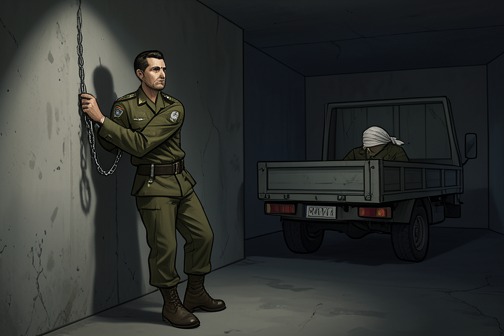
[Mike Durant's capture and release in Somalia](entity:event-recall-event-d5ffc5a1dfa5) extended the fighting beyond the wreckage of his [Black Hawk helicopter](entity:object-recall-object-black-hawk-helicopter-51641d62e077): an injured pilot became a hostage whose fate was tied to the politics of [Mogadishu](entity:location-recall-location-mogadishu-2b8d2d4a4b85) and to the United States' refusal to pay or trade for his return. His survival depended first on successive armed groups, then on the uneasy protection of [Abdullahi Hassan](entity:character-recall-character-abdullahi-hassan-12cbb252cf91), while the battle's dead and wounded, televised images, and negotiations turned his captivity into a public and diplomatic crisis.
## Capture and Transfer Between Armed Groups
On the morning of October 4, Durant woke in a small, windowless octagonal room, chained by the hands and unable to locate himself in Mogadishu. He had not slept. The previous evening, an angry crowd had overrun his downed helicopter crew and the two Commando sergeants who had fought to protect them. Durant did not know that the others were dead. His right femur was broken, with bone having pierced the flesh, and he believed his back might also have been injured in the crash.
The force holding him had changed during the journey from the crash site. Yousuf Dahir Mo'Alim, a neighborhood militia leader, had spared Durant from the attacking crowd. Mo'Alim's men were carrying the pilot toward their village, intending to contact leaders of the [Habr Gidir clan](entity:organization-recall-organization-57b5c66e9d27), when a Land Cruiser with a mounted gun intercepted them. Its occupants were freelance street fighters aligned with no clan. They treated Durant not as a prisoner of war to be exchanged for detained clan leaders, but as a hostage for whom someone might pay. Outnumbered and outgunned, Mo'Alim's men handed him over. In the account's stark summary of power in the city, the group with the bigger guns prevailed; if [Mohamed Farrah Aidid](entity:character-recall-character-mohamed-farrah-aidi-e13ea17ccdff) wanted Durant back, he would have to pay.
The kidnappers bound Durant with a metal dog chain, wrapping it around his hands on his stomach. During the night he worked one hand free because sweat let it slide from the chain. The small gain let him wipe dirt from his face and ease his broken leg; he then put his hand back into the restraint so his captors would not notice. It was a limited act of resistance, but one that gave him a first sense of triumph while he remained helpless and alone.
## A City at War, a Captive in the Middle
Durant's captivity unfolded against a battle in which civilians and armed fighters were difficult to distinguish. The Rangers had been ordered to fire only at people pointing weapons at them, but armed men were intermingled with women and children, and crowds converged on the fighting. During the convoy's movement, a woman carrying a baby ran beside a truck. A soldier warned the driver not to shoot because she had a child, then saw her turn and raise a pistol; he fired, and could not tell whether the baby had also been hit. The episode makes the battlefield's split-second judgments concrete without resolving their terrible uncertainty.
Elsewhere, the convoy's discipline collapsed under fire. A Ranger described shooting at children, some armed and some not, and firing into crowds alongside men with rifles; he felt numb, angry, and determined to get his friends back safely. The battered column eventually reached the airport gate, where the shooting stopped and people in the market streets applauded as the soldiers passed. These scenes frame Durant's captivity within a conflict that had crossed the boundary between combat and civilian life, and in which the force used to recover the trapped soldiers carried its own consequences.
The wider public learned of those consequences through television. Early on October 5, exhausted soldiers at the base watched [CNN](entity:organization-recall-organization-cnn-fc1d8abce1ee) footage of Somalis celebrating on the rotor blades of Durant's helicopter and dragging a dead American through the street. The images provoked disgust and anger among the soldiers. In the United States, President [Bill Clinton](entity:character-recall-character-bill-clinton-7fedda7b8056) saw the footage and was horrified; he also wanted to know why he had not been informed before the mission. Congress questioned senior officials about the deaths of American soldiers in [Somalia](entity:location-recall-location-e9f8e868ef14). The book reports eighteen Americans dead, seventy-three wounded, more than five hundred Somalis dead, and at least a thousand injured. Durant's captivity was thus bound to a larger argument over the mission and its cost.
## Captivity, Interrogation, and Care
On the evening of October 4, about ten young men arrived with a camera crew and an array of lights. Durant was hungry, thirsty, frightened, and visibly injured; a militiaman had struck him in the face with a rifle butt. He had been questioned throughout the day about his identity and his unit. Trained to give as little information as possible and to avoid confrontation, he adhered to his military code of conduct during the filmed interview. When the interviewer assumed he was a Ranger, Durant corrected him: he was a pilot. He also acknowledged that the killing of innocent people was not good, without giving the interviewer more information about his mission.
After being moved from the room where he had first awakened, Durant was taken by car to an apartment. The journey sharply aggravated his swollen, broken leg: two men sat on him, and every movement caused pain. There he was left with Abdullahi Hassan, known as Firimbi, the propaganda minister for Mohamed Farrah Aidid. Durant did not know that Aidid had paid his ransom. Firimbi would remain his custodian for the next ten days.
Durant's fear changed over the first several days. He had initially feared execution or torture; later, having survived the enraged crowd, he chiefly feared being discovered by the public. Firimbi shared that fear and treated him humanely, regarding him as a prisoner of war and hoping that humane treatment would improve Somalis' image in America. The two men were together day and night for a week. Firimbi spoke Italian and Durant some Spanish, languages similar enough to permit limited communication. Their relationship did not remove the fact of captivity, but it shaped the conditions in which Durant endured it.
A small black plastic radio became a lifeline. With its volume so low that he had to hold it to his ear, Durant listened to the BBC World Service and reports about his own captivity. After five miserable days, Firimbi cleaned him, redressed his wounds, changed the bedsheets, and gave him a clean shirt and a ma-awis. The preparation preceded a visit from Suzanne Hofstadter, a Norwegian relief worker, who brought forms for a letter. Durant held her hand and wrote to his family that he was doing all right, described his injuries, and asked them to pray for the others. He still did not know what had happened to his crew or to the two men who had descended to protect him. In a separate note to his companions at the hangar, he tried to reassure them with a lighthearted request that they leave the Jack Daniels in his rucksack untouched, ending with the initials of his unit's motto.
## Negotiations and Release
U.S. policy rejected both payment and an exchange. When [Robert Oakley](entity:character-recall-character-robert-oakley-d5aeb51f1ec6) arrived in Mogadishu on October 8, Mohamed Farrah Aidid was in hiding, so Oakley met with clan leaders instead. He told them that the U.S. operation against Aidid had ended and that Task Force Ranger's original mission was over, but the leaders were skeptical. They pointed to the sixty or seventy men detained by the task force, including Omar Salad and Mohammed Hassan Awale, and insisted that Durant's release would have to involve a trade.
Oakley said he would try to secure the detainees' release but could not promise it, and only after Durant was freed. He warned that if the pilot remained captive, the United States would decide to rescue him, not pay or trade for him; renewed fighting, he said, would unleash the pent-up anger on the U.S. side and devastate the area. The warning placed the prospect of another battle beside the stated refusal to bargain. The clan leaders relayed Oakley's message and what he called friendly advice to Aidid, who offered to hand Durant over. Oakley asked them to wait a few hours so he could leave the country, instructed them to turn Durant over to [Paul Howe](entity:character-recall-character-paul-howe-7f07a22906e8), and flew back to Washington. Several weeks later, Clinton ordered the release of every Somali captured by Task Force Ranger.
Durant's return was staged as both a celebration and a reckoning. Everyone based at the hangar turned out to salute him as he was carried on a litter through hundreds of men in desert fatigues, an IV in his arm and his unit's red beret in his hand. The relief was enormous, but Durant was the only member of his four-man crew and the two Commando defenders to come back. His release ended his captivity, not the losses that had made him a hostage or the questions raised by the battle. The homecoming joined a single survivor's return to a casualty toll that, by the account's reckoning, made the fight the largest involving American troops since the [Vietnam War](entity:time-recall-time-vietnam-war-e7a08391fc30).
Event 11
U.S. decision to withdraw from Somalia
The [U.S. decision to withdraw from Somalia](entity:event-recall-event-098b2578fe52) ended the campaign to capture [Mohamed Farrah Aidid](entity:character-recall-character-mohamed-farrah-aidi-e13ea17ccdff) and set a timetable for American forces to leave. Made after the [October 3, 1993](entity:time-recall-time-october-3-1993-7afa3999f929), battle in [Mogadishu](entity:location-recall-location-mogadishu-2b8d2d4a4b85), it reflected a sharp divide between the military assessment that Aidid’s position had been weakened and the political reality that the American public and Congress no longer supported continuing the mission.
## The Crisis Behind the Decision
The raid that precipitated the decision had begun as a daylight operation to seize two of Aidid’s lieutenants in the [Bakara Market](entity:location-recall-location-8d71a86c63f8) area of Mogadishu. A commando force was to enter the target house while U.S. Rangers descended by helicopter to seal off the surrounding block; a ground convoy would then carry the prisoners and assault force back to base. The operation took place in a city devastated by five years of civil war, and the choice to strike in daylight sent the troops into an area crowded with Aidid supporters.
The operation’s assumptions quickly collided with conditions on the streets. Rangers had been ordered to fire only at people pointing weapons at them, but armed men were intermingled with women and children, while crowds converged on the fighting. As the firefight intensified, the boundaries between combatants and civilians became harder for soldiers to judge. One Ranger convoy member first shouted a warning when a woman carrying a baby ran beside a truck, then shot her after she turned and raised a pistol; he could not tell whether the infant had also been hit. Elsewhere, a Ranger described becoming numb and angry during the return to base, firing at young boys and into crowds that included women. Such episodes made the human cost of the battle inseparable from the decisions made under fire.
By October 4, the immediate military crisis had become a national political one. America awoke to reports of 18 soldiers dead, more than 70 wounded, hundreds of Somalis dead, and [Michael Durant](entity:character-recall-character-michael-durant-8f8d6ece56ed) held captive. Television images of a dead American soldier being dragged through Mogadishu’s streets intensified the shock. [Bill Clinton](entity:character-recall-character-bill-clinton-7fedda7b8056), watching the images from a hotel room in San Francisco, was horrified and angry; the mission had been mounted so quickly that he had not been informed in advance, although earlier missions had been briefed to him. He wanted to know who had authorized it and demanded answers about both policy and military tactics.
## [The White House](entity:location-recall-location-9fd5fefc5ad5) Deliberates
On October 6, the crisis was addressed in a six-hour meeting that began at the East Wing breakfast table and continued in the Oval Office. National Security Adviser Anthony Lake, his deputy Samuel R. Berger, U.S. Ambassador to the [United Nations](entity:organization-recall-organization-e95d8c5557b2) Madeleine K. Albright, President Bill Clinton, the vice president, Secretary of State Warren Christopher, Secretary of Defense Les Aspin, the chairman of the Joint Chiefs of Staff, and other advisers gathered to decide what the United States should do next. [Robert Oakley](entity:character-recall-character-robert-oakley-d5aeb51f1ec6), an experienced former envoy to [Somalia](entity:location-recall-location-e9f8e868ef14), joined them, though he had not been consulted by the White House or State Department as events unfolded.
The political pressure was immediate and visible. The day after the battle, Aspin and Christopher had faced angry questions from members of Congress about why American soldiers were dying in Somalia. Eighteen soldiers were dead and 73 wounded; hundreds of Somalis had also died, and Michael Durant remained a captive. Images of a dead American dragged through Mogadishu by jeering crowds had become a public emblem of the disaster. Clinton, who had not been briefed before a mission mounted with unusual speed, felt blindsided and wanted answers extending from the policy behind the operation to its military tactics.
The military assessment did not point in the same direction as the political response. Retired Admiral [Jonathan Howe](entity:character-recall-character-jonathan-howe-8e25195265fe), who headed the United Nations effort in Somalia, and Major General William F. Garrison, commander of Task Force Ranger, believed Mohamed Farrah Aidid had been dealt a potentially mortal blow. Intelligence indicated that supporters were fleeing Mogadishu, their rocket-propelled-grenade arsenals exhausted; some were also offering peace feelers and proposing to abandon Aidid. In their view, further pressure might finish the campaign. But those signs of weakness could not overcome the public outrage and congressional demand for withdrawal. The administration concluded that the United States had lost its appetite for continuing the mission.
## The Withdrawal and Its Consequences
The decision was to end the pursuit of Mohamed Farrah Aidid, not to leave immediately. Task Force Ranger would remain in Somalia, reinforced to demonstrate American resolve, but the United States would make what the administration called a dignified withdrawal by March 1994. All efforts to capture Aidid were to stop. Robert Oakley was sent to Mogadishu to deliver the decision and seek the release of Michael Durant; he was instructed to convey that President Bill Clinton wanted the pilot released at once.
That course overruled the military case for continuing. Although intelligence suggested Aidid’s supporters were leaving the city, their rocket-propelled-grenade supplies were spent, and some were offering to abandon him, the administration judged that American public and congressional support had collapsed. The battle had cost 18 American lives and left 73 soldiers wounded; more than 500 Somalis were dead and at least a thousand injured. Its images and casualties had made the campaign politically untenable even as commanders believed Aidid might be close to defeat.
The withdrawal decision marked the effective end of the American mission in Somalia. President Clinton later accepted Oakley’s plea on behalf of Somali leaders and ordered the release of every Somali captured by Task Force Ranger. Every American who had fought in the battle was back home within a month. The outcome set a clear limit on what battlefield success could secure: the raid’s original objective had been to capture two of Aidid’s lieutenants, but its human and political cost ended the wider effort to capture Aidid.
## Losses, Judgment, and Public Memory
The scale of the losses stood in stark contrast to the narrow objective that had initiated the raid. The battle left 18 Americans dead and 73 wounded, while more than 500 Somalis were killed and at least a thousand injured. The two men the operation had set out to capture, Omar Salad and Mohammed Hassan Awale, remained little known even after the fighting. The disparity between the operation’s limited target and its far-reaching human cost sharpened the meaning of the withdrawal: the decision ended an effort whose consequences had vastly exceeded the importance attached to its original quarry.
Assessments of the battle did not settle into a single verdict. Colin L. Powell, the former chairman of the Joint Chiefs of Staff who had approved sending Task Force Ranger to Mogadishu, judged that the troops had fought well and that nothing had gone wrong militarily; he described the outcome as a bad afternoon and contrasted 18 American deaths with the far greater weekly losses that had once gone largely unnoticed in Vietnam. In Mogadishu, however, October 3 came to be honored as [Ma-alinti Rangers](entity:concept-recall-concept-ma-alinti-rangers-4d3ce2961cc2), or [The Day of the Rangers](entity:expression-recall-expression-the-day-of-the-ran-53da89afb467), and regarded as a national victory. The episode’s ending thus held two meanings at once: the United States withdrew after a devastating defeat in political terms, while many Somalis remembered the day as a victory, though one the narrative calls Pyrrhic.
Event 12
Death of Mohamed Farrah Aidid
The death of [Mohamed Farrah Aidid](entity:character-recall-character-mohamed-farrah-aidi-e13ea17ccdff) is recounted as a later and notably spare coda to the violence surrounding [Mogadishu](entity:location-recall-location-mogadishu-2b8d2d4a4b85): he was killed in factional fighting in 1996, rather than during the battle described in the book. The account gives no details of the circumstances, but marks the coincidence that his death occurred on the day Garrison retired from the Army.
## Circumstances of His Death
Aidid was killed in factional fighting in 1996. The account does not identify the factions involved or describe where or how the fighting unfolded. Its brevity leaves the killing as a reported endpoint, not a narrated battle scene, and does not establish a direct connection between his death and the American operation in Mogadishu.
## The American Code Name
The Americans had code-named Aidid Yogi the Bear. The book supplies the name as a detail of how American forces referred to him; it offers no further explanation of the code name or its use in the circumstances of his death.
## Coincidence with Garrison’s Retirement
Aidid died on the same day Garrison retired from the Army. The account presents the overlap as a coincidence, adding that Garrison is said to note it with a wink. That small personal detail gives the death a point of connection to the American military narrative without implying that the two events were otherwise related.
## The October 3 Commemoration
The account places Aidid’s death after describing how many people in Mogadishu continue to honor October 3 as [Ma-alinti Rangers](entity:concept-recall-concept-ma-alinti-rangers-4d3ce2961cc2), or [The Day of the Rangers](entity:expression-recall-expression-the-day-of-the-ran-53da89afb467), and regard it as a national victory. It calls the outcome Pyrrhic for either side. The commemoration concerns October 3, not the date of Aidid’s death; the distinction keeps the battle’s public memory separate from the later factional fighting in which he was killed.